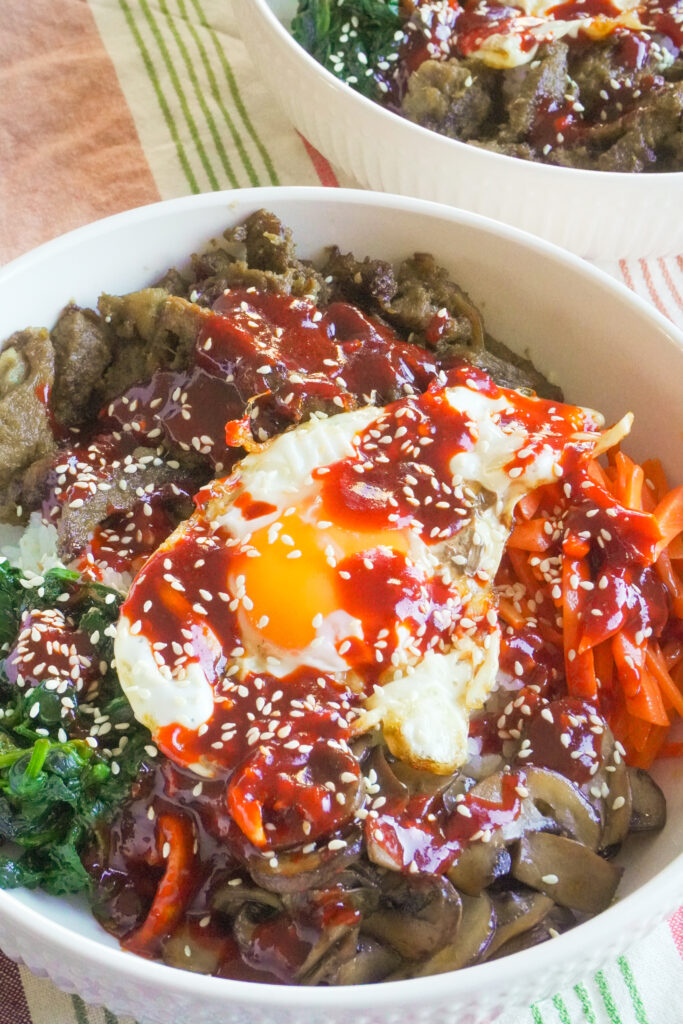
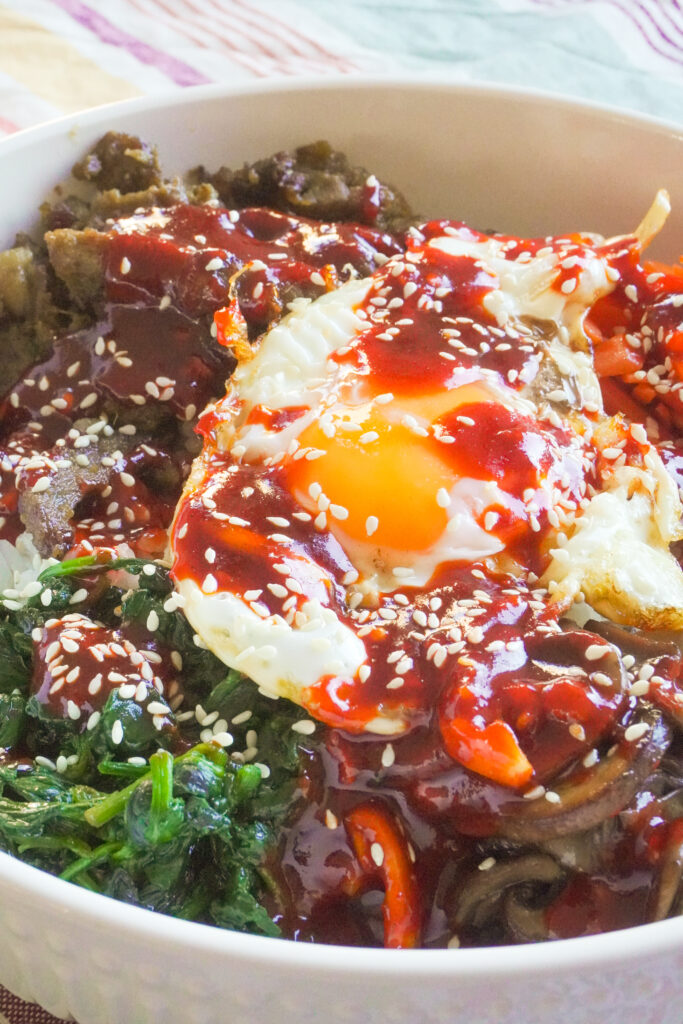
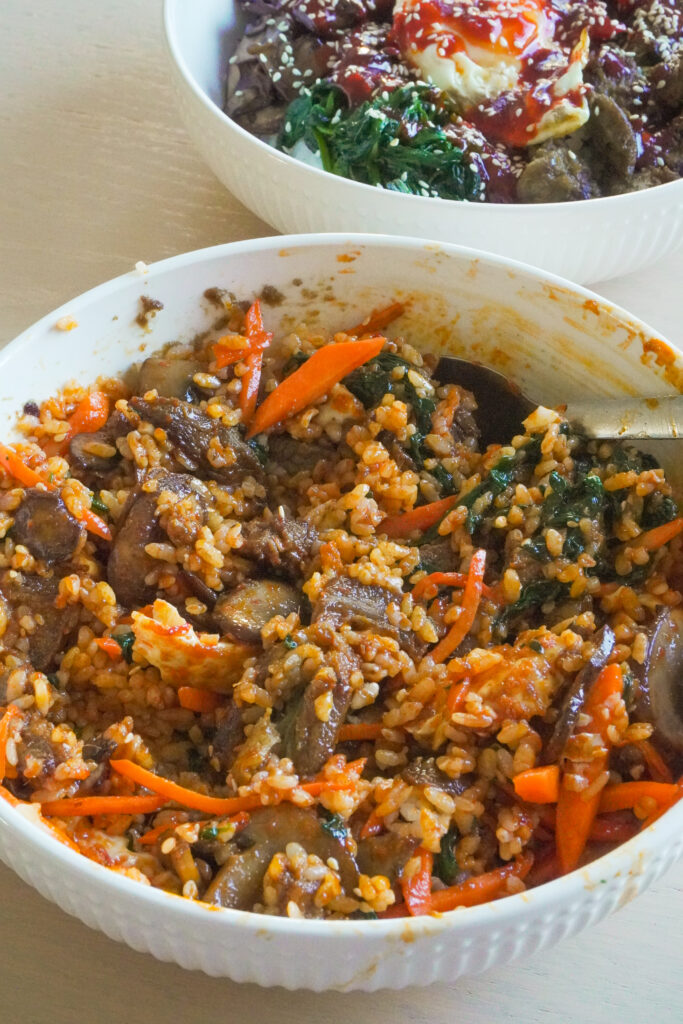
Bulgogi Bibimbap

Succulent, smokey, caramelised and perfectly marinated Bulgogi beef meets Bibimbap’s colourful veggies served with a drizzle of spicy Gochujang sauce mix making every bite deliciously unique!
Ingredients
- 2 cups Sushi Rice
- 2 cups Water
- A pinch Salt
Bulgogi
- 500 g Chuck Steak/Flank Steak cut into long 1/2 cm thin strips
- 5 stalks Spring Onion
- ½ Brown Onion
- 4 cloves Garlic
- 1 inch Ginger peeled
- ½ Pear peeled and cored (see notes)
- 30 ml Water for blending
- 1 tsp Ground Black Pepper
- 2 tbsp Sesame Seed Oil
- 1 tsp Brown Sugar
- 1 tsp Fine White Sugar/Castor Sugar
- 1 tsp Brown Rice Syrup see notes
- 1 tsp Brown Rice Vinegar see notes
- 2 tsp Light Soy Sauce
- Vegetable Oil (for frying) neutral tasting
Gochujang Sauce Mix
- 2 tbsp Gochujang Paste
- 1-3 tbsp Spicy Sauce of preference (I used Samyang 2x Spicy Sauce) depending on heat preference
- 4 cloves Garlic minced
- 1 tbsp Brown Rice Syrup
- 4 tsp Brown Rice Vinegar
- 2 tsp Light Soy Sauce
- 1 tbsp Sesame Seed Oil
Vegetables
- 4 Carrots cut into matchsticks
- 400 Mushrooms (white buttons/brown/shiitake) thinly sliced
- 1½ tsp Garlic Powder
- 400 Spinach
- Vegetable Oil (to stir fry vegetables) neutral tasting
- Salt
Garnish (optional)
- Eggs fried: sunny side up
- Sesame Seeds toasted
Instructions
- Combine the spring onions, brown onion, garlic cloves, ginger, pear, and water in a blender and blend until smooth. Once done, add the mixture to the beef along with ground black pepper, sesame seed oil, brown sugar, fine white sugar/castor sugar, brown rice syrup, brown rice vinegar, and light soy sauce. Mix until the beef is thoroughly coated. Let it marinate for 30 minutes to 1 hour (overnight is great too!).
- Wash the sushi rice with 2–3 rinses by placing the uncooked rice in a strainer and running it under water, gently rubbing the rice with your fingers. The washing is to get rid of excess starch so the rice would not be mushy when cooked. Once clean, drain the water well and transfer the rice to a rice cooker. Add water, and salt to the rice and cook it.
- In a small mixing jar, add all the ingredients for the Gochujang sauce except the sesame oil. In a pan, heat the sesame oil and then add it to the sauce ingredients. Whisk until everything’s well combined. Set it aside.
- Heat oil in a pan on medium heat. Once hot, add the marinated beef (in batches) and fry for 5 minutes. As it cooks, the beef will release liquid, at this point, turn up the heat to medium-high and continue frying for 10–15 more minutes until the sauce thickens and you see little charred spots on the beef. Remove from heat and set it aside.
- In a clean pan, heat a little oil over medium heat. Add the carrots and a pinch of salt and flash fry for 3 minutes. Set aside. In the same pan, add a little more oil over medium high heat. Add the mushrooms and sauté for 2 minutes, then add the garlic powder and a pinch of salt. Cook until the liquid releases and evaporates and the mushrooms are slightly charred. Set aside. Finally, add a little more oil over medium heat, add the spinach and a pinch of salt and cook until the liquid releases and evaporates. Set aside.
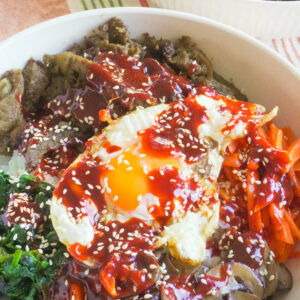
- Scoop some rice into a bowl and arrange the carrots, mushrooms, spinach and bulgogi neatly around it. Drizzle or dollop the gochujang sauce in the middle. Optionally, top with a sunny side up egg, and finish with a generous sprinkle of toasted sesame seeds.
Notes
SUBSTITUTIONS
Pear
Korean pear is commonly recommended. However, as I couldn't find Korean pears, I opted for Conference pears available at my local store. Any sweet pear will do as an alternative. Another option is to use 60 ml of pure pear juice instead (if using pear juice, omit water during the blending phase).
Syrup & Vinegar
This recipe requires brown rice syrup and vinegar for both the Bulgogi marinade and the Gochujang sauce mix. I found both items at my local Korean grocery shop. However, I understand that not everyone may have easy access to these ingredients, especially where they might be hard to find or expensive. In such cases, you can substitute the brown rice syrup with corn syrup or even honey and replace brown rice vinegar with either apple cider vinegar or regular cooking vinegar. While the taste might vary with the substitutions from the intended recipe, it will still be just as delicious!
STORAGE
Store each component separately in airtight containers in the fridge for up to 2 days. The rice, bulgogi, carrots, mushrooms and gochujang sauce all store well separately and are best assembled when ready to eat. Reheat everything gently in a pan over low heat before assembling. The spinach is best cooked fresh each time as it tends to get watery and soggy when stored.